
Category: Technology

  • Cloud Computing Market Growth Accelerates as Enterprises Expand Digital Infrastructure

    Cloud Computing Market Growth Accelerates as Enterprises Expand Digital Infrastructure

    Cloud computing has become a central component of modern business infrastructure, and demand for cloud services continues to grow across the United States. Organizations in finance, healthcare, retail, and manufacturing are increasingly adopting cloud platforms to manage data and operate digital applications. This shift toward cloud-based infrastructure reflects a broader transformation in how businesses manage technology.

    Companies are turning to cloud platforms because they offer flexibility and scalability. Instead of maintaining expensive physical servers, organizations can access computing resources remotely through cloud providers. This allows businesses to quickly increase or decrease computing capacity depending on operational needs.

    The expansion of artificial intelligence applications has further accelerated cloud adoption. AI systems require large amounts of computing power to process data and train machine learning models. Cloud platforms provide the infrastructure necessary to run these workloads without requiring companies to build their own data centers.

    Hybrid cloud strategies are becoming increasingly popular among large enterprises. These systems combine private data infrastructure with public cloud services, allowing organizations to maintain control over sensitive information while benefiting from cloud scalability. Many companies view hybrid systems as the most practical approach for long-term digital infrastructure planning.

    Cloud providers are responding to demand by expanding data center capacity throughout the United States. New facilities are being built in regions with strong internet connectivity and access to reliable energy sources. These investments help providers support the growing needs of enterprise customers and technology developers.

    Security remains a major priority for businesses adopting cloud technology. Providers are implementing advanced encryption systems and cybersecurity measures to protect sensitive data. These protections are particularly important for industries that must comply with strict regulatory standards.

    Environmental concerns are also influencing the development of cloud infrastructure. Data centers consume significant amounts of energy, prompting technology companies to invest in renewable energy partnerships. Many providers are working toward long-term sustainability goals while continuing to expand their computing networks.

    As digital transformation continues across industries, cloud computing is expected to remain a key driver of technological innovation. Analysts believe that demand for cloud services will continue growing as businesses increasingly rely on data-driven operations.

    Sources

    https://www.reuters.com/technology/cloud-computing-growth-enterprise-demand
    https://www.cnbc.com/2025/11/17/cloud-computing-demand-enterprise-tech-spending.html
    https://www.wsj.com/tech/cloud-infrastructure-growth-enterprises
  • U.S. Semiconductor Industry Accelerates Domestic Manufacturing Projects

    U.S. Semiconductor Industry Accelerates Domestic Manufacturing Projects

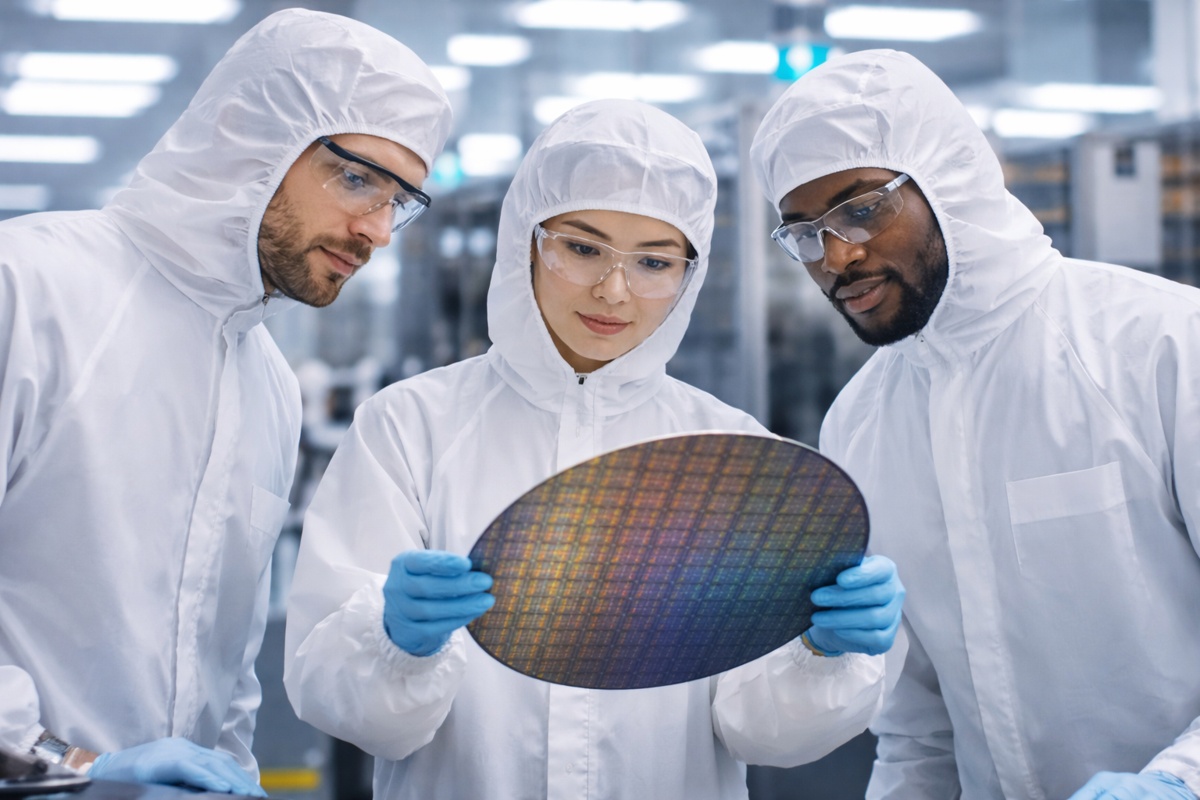
    The U.S. semiconductor industry is accelerating construction of new manufacturing facilities as companies respond to rising demand for advanced chips used in artificial intelligence, cloud computing, and consumer electronics.

    Several major chipmakers have confirmed progress on multi-billion-dollar fabrication plants across the United States. These projects are designed to strengthen domestic chip production and reduce reliance on overseas manufacturing.

    Industry leaders say the expansion reflects both economic opportunity and national security concerns.

    Over the past decade, the majority of semiconductor manufacturing has taken place in Asia. However, recent supply chain disruptions and geopolitical tensions have encouraged governments and companies to rebuild domestic production capacity.

    In the United States, federal incentives and industry partnerships have helped accelerate new chip manufacturing projects.

    Technology companies are particularly focused on producing advanced processors capable of supporting AI applications and high-performance computing. These chips power data centers, autonomous systems, and next-generation consumer devices.

    Construction of semiconductor fabrication plants is one of the most complex industrial projects in the world. Facilities require highly controlled environments, specialized equipment, and billions of dollars in investment.

    Once operational, these factories will produce wafers containing thousands of microchips. Each chip is manufactured through an intricate process involving photolithography, chemical deposition, and precision etching.

    Executives say domestic manufacturing will help reduce supply chain vulnerabilities while creating high-skilled jobs in engineering and manufacturing.

    Local governments and universities are also partnering with semiconductor companies to develop workforce training programs designed to support the growing industry.

    Demand for chips continues to expand across multiple sectors. Automakers require advanced processors for driver-assistance systems, while consumer electronics companies rely on chips for smartphones, laptops, and smart devices.

    Meanwhile, the rapid growth of artificial intelligence applications has significantly increased demand for specialized processors designed for machine-learning workloads.

    Despite the optimism, industry analysts warn that building new semiconductor plants requires long timelines and careful coordination across suppliers.

    Even after construction is completed, it can take years for facilities to reach full production capacity.

    Still, the current wave of investment signals a long-term commitment to strengthening the U.S. semiconductor ecosystem.

    As new plants come online, the United States could regain a larger share of global chip manufacturing while supporting the continued growth of the technology sector.

    Sources

    https://www.reuters.com/technology/us-chipmakers-expand-domestic-manufacturing
    https://www.cnbc.com/2025/10/18/semiconductor-fabs-us-expansion.html
    https://www.wsj.com/tech/chips/us-chip-manufacturing-investment

  • U.S. Tech Giants Expand AI Infrastructure Spending Amid Surging Demand

    U.S. Tech Giants Expand AI Infrastructure Spending Amid Surging Demand

    Technology companies across the United States are significantly increasing spending on artificial intelligence infrastructure, reflecting the rapid expansion of generative AI tools and enterprise AI services.

    Several of the largest tech firms—including cloud providers, chip manufacturers, and software platforms—have announced major investments in data centers, specialized processors, and AI-focused computing networks during the second half of 2025. The surge in spending comes as businesses across industries adopt AI technologies to automate workflows, analyze large datasets, and improve productivity.

    Industry analysts say the scale of investment marks one of the most aggressive infrastructure expansions since the early days of cloud computing.

    The demand for advanced AI models has grown rapidly over the past two years. Training large language models requires enormous computing power, often involving thousands of graphics processing units (GPUs) running simultaneously across distributed data centers. This has pushed technology companies to build new facilities and upgrade existing systems to handle growing workloads.

    Executives from several cloud providers noted that enterprise clients are increasingly requesting dedicated AI computing environments rather than relying on shared infrastructure. These custom environments allow organizations to train proprietary models while maintaining data security and compliance.

    Another factor driving investment is competition among cloud providers to become the primary platform for AI development. Companies are racing to offer faster processors, optimized machine-learning frameworks, and integrated development tools designed for AI engineers.

    Chipmakers are also benefiting from the surge. Demand for high-performance GPUs and AI accelerators has pushed semiconductor companies to ramp up production capacity. These chips are the backbone of modern AI systems and remain one of the most critical components in the technology ecosystem.

    Beyond hardware, companies are investing in energy and cooling systems to support new AI data centers. Large computing clusters require significant electricity and advanced thermal management to operate efficiently. As a result, some technology firms are partnering with renewable energy providers to power new facilities.

    Industry observers say the current spending wave reflects long-term expectations for AI adoption. Organizations are integrating machine learning into everything from customer service automation to cybersecurity monitoring and product development.

    The trend is also influencing the broader technology supply chain. Networking equipment manufacturers, data center operators, and infrastructure software providers are seeing increased demand for products designed to support AI workloads.

    Despite the enthusiasm, some analysts caution that rapid expansion could create risks if demand slows or if technological advances reduce computing requirements. However, most forecasts suggest AI workloads will continue to grow in the coming years.

    As businesses increasingly rely on AI-powered applications, technology companies appear determined to maintain a leadership position by expanding infrastructure capacity at an unprecedented pace.

    For now, the AI race continues to reshape the technology landscape, with infrastructure investment becoming one of the defining trends of the industry’s next phase.

    Sources

    https://www.reuters.com/technology/big-tech-spend-billions-ai-infrastructure
    https://www.cnbc.com/2025/09/16/ai-data-center-investment-surges.html
    https://www.wsj.com/tech/ai-infrastructure-investments-cloud-computing