Category: Environment

  • Major U.S. Cities Expand Urban Tree Programs

    Major U.S. Cities Expand Urban Tree Programs

    Cities across the United States are expanding urban tree planting programs as part of broader climate resilience strategies. Local governments are increasing investments in green infrastructure to address rising temperatures and improve environmental conditions in urban areas.

    Urban trees provide multiple environmental benefits, including shade, improved air quality, and reduced stormwater runoff. Studies show that tree-lined neighborhoods often experience significantly lower temperatures during summer heat waves.

    Several major cities have launched new initiatives to plant thousands of trees in neighborhoods with limited green space. Officials say these areas often face the greatest environmental challenges, including higher pollution levels and reduced access to parks.

    Urban planners are focusing on planting tree species that can thrive in changing climate conditions. Heat-resistant and drought-tolerant species are becoming increasingly important as cities prepare for warmer weather patterns.

    Community involvement plays a key role in many tree planting programs. Volunteers, local organizations, and schools often participate in planting events and long-term maintenance efforts.

    Environmental advocates say expanding urban forests can deliver both ecological and public health benefits. Trees help absorb carbon dioxide while also reducing stress and improving mental well-being for residents.

    As climate adaptation becomes a growing priority, urban greening initiatives are expected to expand across more cities in the coming years. Officials believe these programs represent one of the most accessible ways to strengthen environmental resilience at the local level.

    Sources

    https://www.epa.gov/green-infrastructure/urban-tree-canopy
    https://www.fs.usda.gov/urban-forestry
    https://www.washingtonpost.com/climate-environment/2026/02/10/urban-tree-planting-cities

  • New Wildfire Prevention Strategy Targets Western States

    New Wildfire Prevention Strategy Targets Western States

    Federal agencies have introduced a new wildfire prevention strategy aimed at reducing fire risk across forests in the western United States. The plan focuses on forest management techniques designed to limit the spread of large-scale wildfires.

    Wildfires have intensified in recent years due to drought, rising temperatures, and dense forest conditions. Environmental experts say decades of fire suppression policies have allowed excess vegetation to accumulate in many forests. This buildup can act as fuel during wildfire events.

    The new strategy emphasizes controlled burns and mechanical thinning to reduce vegetation density. These practices mimic natural fire cycles that historically kept forests healthier and less prone to catastrophic fires.

    Officials also plan to expand wildfire monitoring systems using satellite data and advanced predictive models. These technologies help fire managers identify high-risk areas and respond more quickly when fires start.

    Community protection remains a key part of the strategy. Federal agencies will work with local governments to improve evacuation planning, emergency response systems, and wildfire-resistant infrastructure.

    Environmental scientists say proactive forest management can significantly reduce wildfire severity. When forests are less dense, fires tend to burn at lower intensities and spread more slowly.

    As climate conditions continue to increase wildfire risks, policymakers are prioritizing prevention rather than relying solely on emergency response. The new federal strategy represents one of the largest coordinated wildfire prevention efforts in recent years.

    Sources

    https://www.fs.usda.gov/managing-land/fire
    https://www.nifc.gov/fire-information
    https://www.nytimes.com/2026/01/14/climate/wildfire-prevention-plan.html

  • U.S. Expands Offshore Wind Development Plans

    U.S. Expands Offshore Wind Development Plans

    Federal officials announced new offshore wind development zones along the Atlantic coast as part of a broader renewable energy expansion strategy. The initiative aims to increase clean electricity generation while reducing dependence on fossil fuels.

    Offshore wind farms have become a major focus of U.S. energy policy in recent years. Coastal regions offer strong and consistent wind resources that can generate large amounts of electricity. Government leaders say expanding offshore wind capacity will play a critical role in meeting national climate goals.

    Several new lease areas will be opened for development, allowing energy companies to build wind turbines in designated offshore zones. The projects are expected to generate enough electricity to power millions of homes once fully operational.

    Environmental groups have generally supported offshore wind expansion, though some concerns remain about potential impacts on marine ecosystems. Researchers are studying how turbine construction and operation could affect whales, fish populations, and migratory birds.

    Federal regulators say environmental impact assessments will be required before construction begins. These reviews will evaluate how projects might affect marine life, fisheries, and coastal communities.

    Energy economists note that offshore wind development also offers economic benefits. Large-scale wind projects require significant investment in manufacturing, installation, and maintenance infrastructure. These developments could create thousands of jobs across coastal states.

    As the renewable energy sector grows, policymakers are working to balance environmental protection with energy expansion. The offshore wind initiative represents one of the largest renewable energy investments currently underway in the United States.

    Sources

    https://www.energy.gov/articles/us-expands-offshore-wind-development
    https://www.boem.gov/renewable-energy/offshore-wind
    https://www.reuters.com/business/energy/us-offshore-wind-expansion-2025

  • National Park Service Launches Climate Adaptation Initiative

    National Park Service Launches Climate Adaptation Initiative

    The National Park Service (NPS) has announced a new climate adaptation initiative aimed at protecting parks from the growing impacts of climate change. The program will focus on strengthening ecosystems and preserving historic landscapes that face increasing environmental pressure.

    National parks across the United States are already experiencing climate-related changes. Rising temperatures, shifting wildlife patterns, and extreme weather events are affecting ecosystems from Yellowstone to Everglades National Park. Park officials say proactive planning is necessary to safeguard these environments for future generations.

    The new initiative includes expanded research programs, habitat restoration projects, and climate monitoring systems. Scientists will collect long-term data to understand how environmental conditions are changing across different park regions. These insights will guide future conservation strategies.

    Park managers also plan to modify infrastructure to withstand climate-related risks. Roads, trails, and visitor facilities may require upgrades to handle flooding, wildfires, or erosion. Officials say these changes will help protect both natural resources and visitor safety.

    Wildlife conservation remains a central part of the program. Changing climate conditions can alter migration patterns and food availability for many species. Researchers are working to identify ways to protect vulnerable wildlife populations as ecosystems evolve.

    Environmental experts say national parks provide valuable insights into broader climate trends. Because many parks remain relatively undeveloped, they serve as important natural laboratories for scientific research. Monitoring changes in these ecosystems can help scientists understand larger environmental shifts.

    The initiative also includes public education programs aimed at increasing awareness about climate impacts. Park visitors will have access to exhibits, ranger talks, and educational materials explaining how climate change affects protected landscapes.

    Officials hope the program will encourage collaborative research with universities and environmental organizations. By sharing data and resources, scientists can better understand how climate change is reshaping natural ecosystems across the country.

    Sources

    https://www.nps.gov/subjects/climatechange/index.htm
    https://www.doi.gov/news/national-park-service-climate-adaptation
    https://www.scientificamerican.com/article/climate-change-national-parks

  • Federal Investment Expands Coastal Restoration Projects Across the Gulf

    Federal Investment Expands Coastal Restoration Projects Across the Gulf

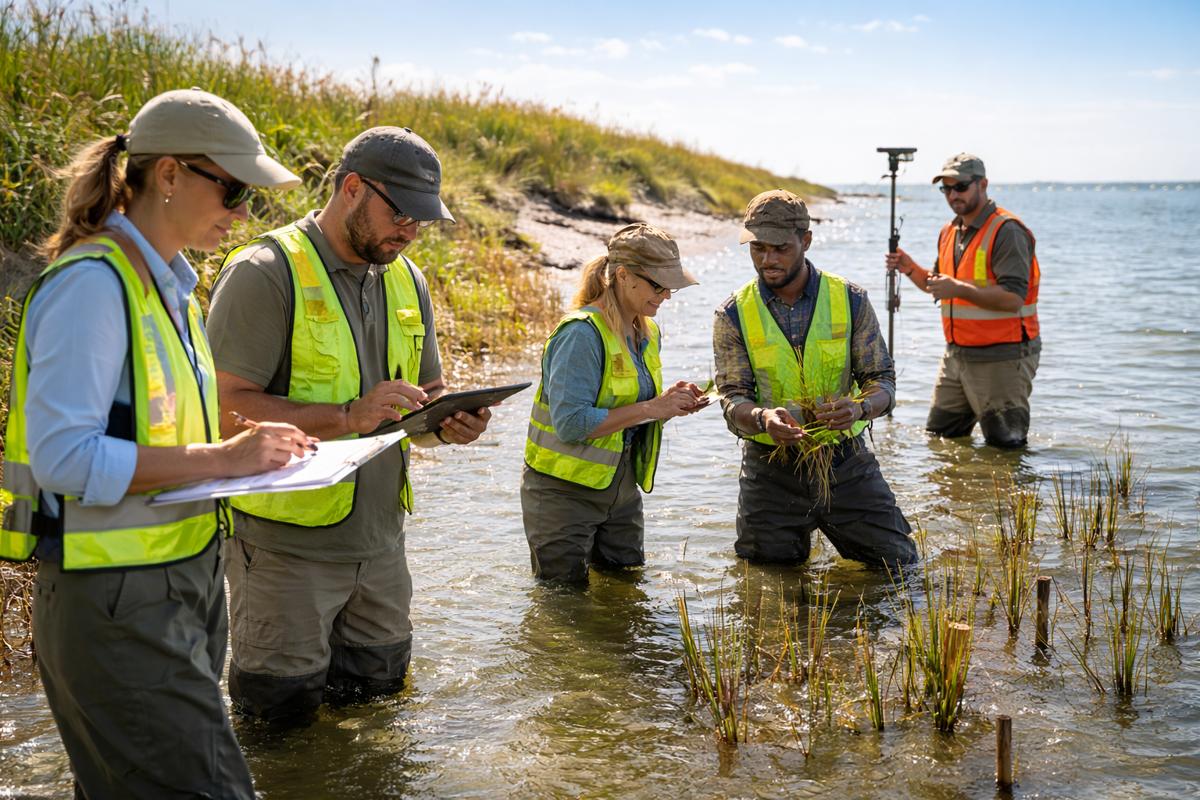
    Federal officials announced a major investment in coastal restoration projects along the Gulf Coast, targeting wetlands and shoreline ecosystems that have been deteriorating for decades. The funding aims to rebuild natural barriers that protect coastal communities from storm surges while restoring wildlife habitats.

    Wetlands serve as one of nature’s most effective defenses against hurricanes and flooding. However, decades of development, erosion, and rising sea levels have caused significant loss of these ecosystems. Government leaders say restoration work will help stabilize coastlines while strengthening environmental resilience.

    The restoration plan includes rebuilding marshlands, restoring oyster reefs, and replenishing eroded shorelines with natural sediment. These projects are designed to slow land loss while improving water quality and biodiversity. Scientists involved in the effort say coastal ecosystems provide critical environmental benefits beyond storm protection.

    Communities along the Gulf Coast have faced increasing environmental threats in recent years. Stronger hurricanes, combined with rising sea levels, have placed additional pressure on coastal infrastructure. Officials believe that strengthening natural ecosystems can complement traditional flood protection measures.

    Local environmental groups have supported the restoration initiatives for years. Many advocates argue that nature-based solutions are more sustainable than large-scale concrete barriers or seawalls. Restoring wetlands, they say, can deliver long-term environmental and economic benefits.

    The federal government expects the projects to create jobs in coastal engineering, environmental science, and construction. Restoration work often requires specialized expertise in habitat management and shoreline stabilization. Officials believe the projects will also support local economies while protecting ecosystems.

    Researchers monitoring the Gulf region say the restoration effort could serve as a model for similar projects across the country. Coastal communities in California, the Carolinas, and Alaska face similar environmental challenges related to erosion and climate change.

    As construction begins on restoration sites, scientists will track progress using satellite imagery and environmental monitoring systems. These data will help measure how effectively restored ecosystems protect communities and support wildlife.

    Sources

    https://www.noaa.gov/news-release/federal-investment-gulf-coast-restoration
    https://www.usgs.gov/news/coastal-wetlands-restoration-projects
    https://www.nationalgeographic.com/environment/article/gulf-coast-wetland-restoration

  • EPA Announces New Methane Reduction Rules for Oil and Gas Sector

    EPA Announces New Methane Reduction Rules for Oil and Gas Sector

    The U.S. Environmental Protection Agency (EPA) unveiled updated methane reduction standards for oil and gas facilities across the country. The new rules aim to significantly reduce methane emissions, one of the most potent greenhouse gases contributing to climate change. Federal officials say the measures will improve air quality, reduce waste, and push the energy sector toward cleaner operational practices.

    Methane emissions from oil and gas infrastructure have long been a major concern for environmental regulators. According to federal data, methane traps more heat in the atmosphere than carbon dioxide over shorter timeframes, making it a critical target for climate policy. By tightening regulations on leaks, venting, and flaring, the EPA hopes to achieve measurable emission reductions within the next decade.

    Under the updated regulations, companies must implement more frequent inspections at drilling sites and compressor stations. Advanced leak detection technologies, including infrared monitoring and satellite tracking, will also become part of compliance requirements. Federal officials argue that these technologies allow operators to identify leaks quickly and prevent large-scale methane releases.

    Industry groups have expressed mixed reactions to the announcement. Some companies support the rules, noting that methane captured from leaks can be reused or sold, creating economic benefits. Others argue that the compliance costs could place financial pressure on smaller operators that lack the resources to upgrade monitoring systems quickly.

    Environmental advocates welcomed the new policy but said stronger enforcement will be essential for success. Advocacy groups note that methane leaks often occur in remote areas where inspections may be infrequent. They are urging regulators to invest in better monitoring systems and stricter penalties for companies that fail to comply.

    The EPA also emphasized that the policy aligns with broader climate goals set by the federal government. Reducing methane emissions is considered one of the fastest ways to slow global warming in the short term. Officials estimate that the rule could prevent millions of tons of methane pollution annually once fully implemented.

    Energy analysts say the rule reflects a growing trend in environmental regulation focusing on high-impact emissions sources. Methane reductions have become a key focus of climate strategies because they can deliver relatively quick results compared to long-term carbon reduction efforts.

    As the policy moves into implementation, regulators will work with state governments and industry stakeholders to ensure compliance timelines are achievable. The coming months are expected to include technical guidance, monitoring frameworks, and additional reporting requirements for companies operating in the oil and gas sector.

    Sources

    https://www.epa.gov/newsreleases/epa-finalizes-stronger-methane-rule-oil-and-gas-industry
    https://www.energy.gov/articles/new-federal-standards-target-methane-emissions
    https://www.nytimes.com/2025/09/18/climate/methane-emissions-epa-rule.html