Category: Business

  • AI Infrastructure Spending Surges as U.S. Tech Giants Expand Data Centers

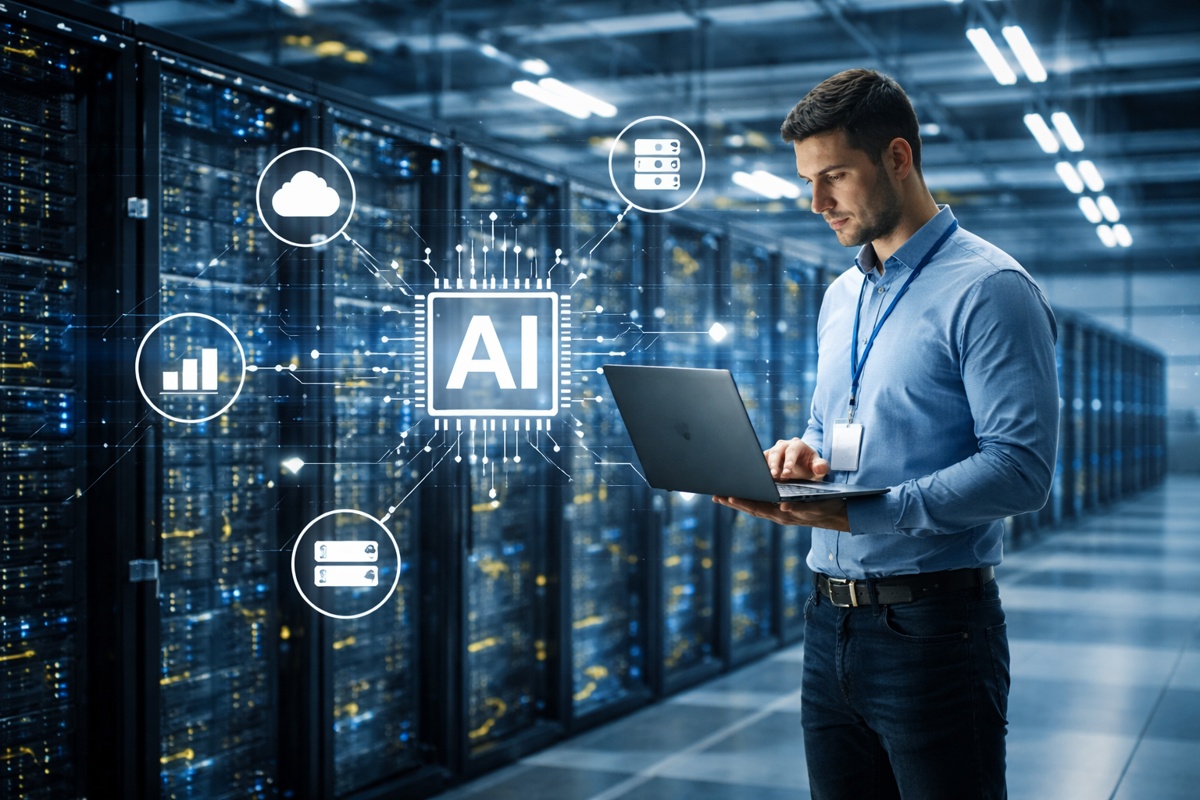
    AI Infrastructure Spending Surges as U.S. Tech Giants Expand Data Centers

    Artificial intelligence has rapidly evolved from a research-driven technology into one of the most important forces shaping modern business. Across the United States, technology companies are investing billions of dollars into data centers and computing systems designed to support increasingly complex AI applications. These investments reflect the growing demand for AI tools that can analyze large datasets, automate processes, and enhance productivity across multiple industries.

    Businesses in sectors such as finance, healthcare, retail, and manufacturing are increasingly incorporating artificial intelligence into everyday operations. Banks are deploying AI-powered systems to detect fraudulent transactions, retailers use predictive algorithms to forecast consumer demand, and healthcare organizations rely on machine learning to support diagnostics and research. As these applications expand, companies must build infrastructure capable of handling the massive computing workloads required by modern AI systems.

    One of the most significant drivers behind this infrastructure expansion is the rise of generative AI. Tools capable of producing text, images, video, and software code have gained widespread adoption in recent years. These systems rely on large language models that require enormous computing resources to train and operate effectively. As demand for these tools continues to grow, companies are expanding data centers designed specifically for AI workloads.

    Unlike traditional cloud facilities, AI-focused data centers rely heavily on specialized processors such as graphics processing units (GPUs). These chips are designed to perform large numbers of calculations simultaneously, making them ideal for machine learning tasks. As a result, semiconductor manufacturers are increasing production of AI accelerators to meet rising demand.

    Technology companies including Microsoft, Google, and Meta have all announced plans to expand their AI infrastructure significantly. New data centers are being built across multiple regions of the United States to support cloud-based AI services used by businesses and developers worldwide. Industry analysts believe these investments will shape the competitive landscape of artificial intelligence for years to come.

    However, the rapid expansion of AI infrastructure presents several challenges. One of the most significant concerns is energy consumption. Data centers require enormous amounts of electricity to power computing clusters and maintain cooling systems designed to prevent overheating. As AI workloads grow more demanding, energy requirements are expected to increase significantly.

    To address these concerns, many technology companies are investing in renewable energy sources and exploring new cooling technologies designed to improve efficiency. Some data centers are experimenting with advanced liquid cooling systems that reduce power consumption while maintaining optimal performance.

    Supply chain issues also remain a potential obstacle for the AI industry. The global demand for high-performance chips has surged, creating shortages in some areas. Semiconductor manufacturers are expanding production capacity, but building new fabrication plants can take years.

    Despite these challenges, analysts believe AI infrastructure investment will continue accelerating in the coming years. Businesses increasingly view artificial intelligence as a strategic asset capable of improving efficiency, reducing costs, and creating new opportunities for innovation.

    As AI becomes more deeply integrated into the global economy, the development of scalable computing infrastructure will play a crucial role in determining which companies and countries lead the next wave of technological transformation.

    Sources:
    https://techcrunch.com/2026/02/28/billion-dollar-infrastructure-deals-ai-boom-data-centers-openai-oracle-nvidia-microsoft-google-meta/
    https://www.reuters.com/business/us-ai-startups-see-funding-surge-while-more-vc-funds-struggle-raise-data-shows-2025-07-15/

  • AI Infrastructure Spending Surges as U.S. Tech Giants Expand Data Centers

    Artificial intelligence has rapidly evolved from a research-driven technology into one of the most important forces shaping modern business. Across the United States, technology companies are investing billions of dollars into data centers and computing systems designed to support increasingly complex AI applications. These investments reflect the growing demand for AI tools that can analyze large datasets, automate processes, and enhance productivity across multiple industries.

    Businesses in sectors such as finance, healthcare, retail, and manufacturing are increasingly incorporating artificial intelligence into everyday operations. Banks are deploying AI-powered systems to detect fraudulent transactions, retailers use predictive algorithms to forecast consumer demand, and healthcare organizations rely on machine learning to support diagnostics and research. As these applications expand, companies must build infrastructure capable of handling the massive computing workloads required by modern AI systems.

    One of the most significant drivers behind this infrastructure expansion is the rise of generative AI. Tools capable of producing text, images, video, and software code have gained widespread adoption in recent years. These systems rely on large language models that require enormous computing resources to train and operate effectively. As demand for these tools continues to grow, companies are expanding data centers designed specifically for AI workloads.

    Unlike traditional cloud facilities, AI-focused data centers rely heavily on specialized processors such as graphics processing units (GPUs). These chips are designed to perform large numbers of calculations simultaneously, making them ideal for machine learning tasks. As a result, semiconductor manufacturers are increasing production of AI accelerators to meet rising demand.

    Technology companies including Microsoft, Google, and Meta have all announced plans to expand their AI infrastructure significantly. New data centers are being built across multiple regions of the United States to support cloud-based AI services used by businesses and developers worldwide. Industry analysts believe these investments will shape the competitive landscape of artificial intelligence for years to come.

    However, the rapid expansion of AI infrastructure presents several challenges. One of the most significant concerns is energy consumption. Data centers require enormous amounts of electricity to power computing clusters and maintain cooling systems designed to prevent overheating. As AI workloads grow more demanding, energy requirements are expected to increase significantly.

    To address these concerns, many technology companies are investing in renewable energy sources and exploring new cooling technologies designed to improve efficiency. Some data centers are experimenting with advanced liquid cooling systems that reduce power consumption while maintaining optimal performance.

    Supply chain issues also remain a potential obstacle for the AI industry. The global demand for high-performance chips has surged, creating shortages in some areas. Semiconductor manufacturers are expanding production capacity, but building new fabrication plants can take years.

    Despite these challenges, analysts believe AI infrastructure investment will continue accelerating in the coming years. Businesses increasingly view artificial intelligence as a strategic asset capable of improving efficiency, reducing costs, and creating new opportunities for innovation.

    As AI becomes more deeply integrated into the global economy, the development of scalable computing infrastructure will play a crucial role in determining which companies and countries lead the next wave of technological transformation.

  • Small Businesses Accelerate Adoption of Digital Tools and Automation

    Small Businesses Accelerate Adoption of Digital Tools and Automation

    Small businesses across the United States are increasingly turning to digital tools and automation platforms to streamline operations and remain competitive in a rapidly evolving marketplace. As consumer behavior shifts toward online interactions and digital commerce, many entrepreneurs are investing in technology solutions that improve efficiency and expand market reach.

    Digital transformation among small businesses has accelerated in recent years as affordable cloud software and online platforms become more widely available. Tools that were once accessible only to large corporations are now being adopted by smaller companies seeking to improve productivity and customer engagement.

    One of the most widely adopted technologies among small businesses is cloud-based accounting software. These platforms allow business owners to manage financial records, track expenses, and generate reports without relying on complex manual processes. Automation features can reduce administrative workloads and allow entrepreneurs to focus more on strategic growth.

    Digital marketing platforms have also become essential tools for small businesses. Social media advertising, email marketing systems, and search engine marketing allow companies to reach targeted audiences more effectively than traditional advertising methods. Even businesses with limited budgets can now promote products and services through digital channels.

    E-commerce has become another major driver of digital adoption. Many small businesses now operate online storefronts that allow customers to browse products, place orders, and make payments through secure digital systems. Online marketplaces have expanded opportunities for entrepreneurs to sell products beyond their local communities.

    Payment technology has also evolved significantly. Mobile payment systems, contactless transactions, and digital wallets have become increasingly common. These tools make it easier for customers to complete purchases while reducing transaction processing times for businesses.

    However, digital transformation also introduces new challenges. Cybersecurity has become a major concern for small businesses as cyberattacks and data breaches become more common. Many entrepreneurs are investing in cybersecurity software and employee training programs to protect sensitive information.

    Government agencies and business organizations are supporting these efforts through education programs and resources designed to help small businesses adopt digital technologies safely and effectively. Training initiatives often focus on topics such as cybersecurity awareness, digital marketing strategies, and online payment systems.

    Despite the challenges, experts believe digital tools will continue to play an increasingly important role in the growth of small businesses. Companies that successfully integrate technology into daily operations may gain advantages in efficiency, customer reach, and long-term sustainability.

    As digital platforms continue evolving, small businesses are likely to discover new opportunities to innovate and compete within the broader economy. For many entrepreneurs, technology has become an essential tool for navigating the changing landscape of modern commerce.

    Sources:
    https://www.sba.gov/blog/how-digital-tools-help-small-business-grow
    https://www.reuters.com/business/small-business-digital-transformation-2026/

  • Small Businesses Accelerate Adoption of Digital Tools and Automation

    Small businesses across the United States are increasingly turning to digital tools and automation platforms to streamline operations and remain competitive in a rapidly evolving marketplace. As consumer behavior shifts toward online interactions and digital commerce, many entrepreneurs are investing in technology solutions that improve efficiency and expand market reach.

    Digital transformation among small businesses has accelerated in recent years as affordable cloud software and online platforms become more widely available. Tools that were once accessible only to large corporations are now being adopted by smaller companies seeking to improve productivity and customer engagement.

    One of the most widely adopted technologies among small businesses is cloud-based accounting software. These platforms allow business owners to manage financial records, track expenses, and generate reports without relying on complex manual processes. Automation features can reduce administrative workloads and allow entrepreneurs to focus more on strategic growth.

    Digital marketing platforms have also become essential tools for small businesses. Social media advertising, email marketing systems, and search engine marketing allow companies to reach targeted audiences more effectively than traditional advertising methods. Even businesses with limited budgets can now promote products and services through digital channels.

    E-commerce has become another major driver of digital adoption. Many small businesses now operate online storefronts that allow customers to browse products, place orders, and make payments through secure digital systems. Online marketplaces have expanded opportunities for entrepreneurs to sell products beyond their local communities.

    Payment technology has also evolved significantly. Mobile payment systems, contactless transactions, and digital wallets have become increasingly common. These tools make it easier for customers to complete purchases while reducing transaction processing times for businesses.

    However, digital transformation also introduces new challenges. Cybersecurity has become a major concern for small businesses as cyberattacks and data breaches become more common. Many entrepreneurs are investing in cybersecurity software and employee training programs to protect sensitive information.

    Government agencies and business organizations are supporting these efforts through education programs and resources designed to help small businesses adopt digital technologies safely and effectively. Training initiatives often focus on topics such as cybersecurity awareness, digital marketing strategies, and online payment systems.

    Despite the challenges, experts believe digital tools will continue to play an increasingly important role in the growth of small businesses. Companies that successfully integrate technology into daily operations may gain advantages in efficiency, customer reach, and long-term sustainability.

    As digital platforms continue evolving, small businesses are likely to discover new opportunities to innovate and compete within the broader economy. For many entrepreneurs, technology has become an essential tool for navigating the changing landscape of modern commerce.

  • Venture Capital Investors Shift Toward Sustainable Startup Growth

    Venture Capital Investors Shift Toward Sustainable Startup Growth

    The venture capital industry is undergoing a noticeable shift as investors place greater emphasis on sustainable growth and profitability when evaluating startups. After several years of aggressive funding rounds and soaring valuations, many venture firms are now adopting a more cautious investment strategy.

    Startups seeking funding are increasingly expected to demonstrate clear business models and realistic paths to revenue. Investors are focusing on companies that show strong financial discipline rather than those pursuing rapid expansion fueled primarily by venture capital.

    Artificial intelligence remains one of the most attractive sectors for investors. Companies developing AI-driven software, automation platforms, and data analytics tools continue to attract significant funding. Businesses across multiple industries are exploring AI technologies in order to improve efficiency, analyze data, and automate complex processes.

    While AI companies dominate investment activity, other sectors also remain important within the venture capital ecosystem. Cybersecurity startups, financial technology firms, and enterprise software providers continue to receive funding as businesses seek solutions to address evolving digital challenges.

    Investors are also conducting more rigorous evaluations before committing capital. Venture firms now spend more time analyzing market potential, competitive positioning, and leadership teams before making investment decisions. This approach reflects a broader effort to ensure startups have the foundation needed for long-term success.

    Startup founders are adjusting to the changing funding environment by focusing on operational efficiency and revenue growth. Many companies are prioritizing profitability earlier in their development rather than relying on multiple rounds of external financing.

    Industry analysts believe this shift may ultimately strengthen the startup ecosystem. By encouraging sustainable business practices and financial discipline, investors hope to create a more stable environment for innovation and entrepreneurship.

    Although venture capital markets remain active, the emphasis on responsible growth signals a new phase for startup funding. Companies that combine innovative technology with strong financial strategies may have the best chance of attracting investor support in the years ahead.

    Sources:
    https://techcrunch.com/2026/01/19/here-are-the-49-us-ai-startups-that-have-raised-100m-or-more-in-2025/
    https://news.crunchbase.com/venture/global-funding-november-2025-ai-megarounds/

  • Venture Capital Investors Shift Toward Sustainable Startup Growth

    The venture capital industry is undergoing a noticeable shift as investors place greater emphasis on sustainable growth and profitability when evaluating startups. After several years of aggressive funding rounds and soaring valuations, many venture firms are now adopting a more cautious investment strategy.

    Startups seeking funding are increasingly expected to demonstrate clear business models and realistic paths to revenue. Investors are focusing on companies that show strong financial discipline rather than those pursuing rapid expansion fueled primarily by venture capital.

    Artificial intelligence remains one of the most attractive sectors for investors. Companies developing AI-driven software, automation platforms, and data analytics tools continue to attract significant funding. Businesses across multiple industries are exploring AI technologies in order to improve efficiency, analyze data, and automate complex processes.

    While AI companies dominate investment activity, other sectors also remain important within the venture capital ecosystem. Cybersecurity startups, financial technology firms, and enterprise software providers continue to receive funding as businesses seek solutions to address evolving digital challenges.

    Investors are also conducting more rigorous evaluations before committing capital. Venture firms now spend more time analyzing market potential, competitive positioning, and leadership teams before making investment decisions. This approach reflects a broader effort to ensure startups have the foundation needed for long-term success.

    Startup founders are adjusting to the changing funding environment by focusing on operational efficiency and revenue growth. Many companies are prioritizing profitability earlier in their development rather than relying on multiple rounds of external financing.

    Industry analysts believe this shift may ultimately strengthen the startup ecosystem. By encouraging sustainable business practices and financial discipline, investors hope to create a more stable environment for innovation and entrepreneurship.

    Although venture capital markets remain active, the emphasis on responsible growth signals a new phase for startup funding. Companies that combine innovative technology with strong financial strategies may have the best chance of attracting investor support in the years ahead.

  • Companies Continue Expanding Hybrid Work Policies in 2026

    Companies Continue Expanding Hybrid Work Policies in 2026

    Hybrid work models have become a defining feature of the modern workplace as companies across the United States adapt to evolving employee expectations. In recent years, organizations have increasingly adopted flexible work arrangements that allow employees to divide their time between remote work and in-office collaboration.

    This shift accelerated during the global pandemic when businesses were forced to implement remote work policies to maintain operations. While many companies initially expected employees to return to the office full-time, experience has shown that hybrid models can maintain productivity while offering employees greater flexibility.

    Corporate leaders say hybrid work arrangements can improve employee satisfaction and retention. Workers often value the ability to manage their schedules more effectively, reduce commuting time, and maintain a better balance between professional and personal responsibilities. As a result, flexible work policies have become an important factor in attracting and retaining skilled employees.

    Companies are also redesigning office spaces to accommodate hybrid teams. Traditional office layouts built around individual desks are gradually being replaced with collaborative spaces designed for meetings, brainstorming sessions, and team projects. Many offices now include shared workstations, conference areas, and technology-enabled meeting rooms that support both in-person and remote participants.

    Technology has played a central role in enabling hybrid work environments. Video conferencing platforms, cloud-based collaboration tools, and project management software allow employees to remain connected regardless of location. Businesses have invested heavily in these technologies to ensure communication remains efficient and secure.

    However, hybrid work models also present certain challenges. Managers must develop new strategies for maintaining productivity and accountability among distributed teams. Some organizations have implemented performance tracking systems or structured schedules to ensure employees remain engaged and aligned with company goals.

    Another concern involves maintaining company culture and fostering collaboration among employees who may not interact regularly in person. Many companies encourage periodic office gatherings, team meetings, and professional development sessions to strengthen relationships among staff members.

    Some businesses have adopted more structured hybrid policies requiring employees to work from the office on specific days each week. This approach allows teams to collaborate in person while preserving flexibility for remote work.

    Industry experts believe hybrid work will remain a permanent feature of the corporate landscape. Companies that successfully balance flexibility with productivity may gain a competitive advantage in attracting talent and maintaining strong workplace culture.

    For employees and employers alike, the evolution of hybrid work represents a significant transformation in how organizations operate. As businesses continue refining these policies, the workplace of the future will likely blend digital collaboration with physical interaction in new and innovative ways.

    Sources:
    https://www.reuters.com/business/future-work-hybrid-office-trends-2026/
    https://www.wsj.com/articles/companies-rethink-hybrid-work-policies-2026

  • Companies Continue Expanding Hybrid Work Policies in 2026

    Hybrid work models have become a defining feature of the modern workplace as companies across the United States adapt to evolving employee expectations. In recent years, organizations have increasingly adopted flexible work arrangements that allow employees to divide their time between remote work and in-office collaboration.

    This shift accelerated during the global pandemic when businesses were forced to implement remote work policies to maintain operations. While many companies initially expected employees to return to the office full-time, experience has shown that hybrid models can maintain productivity while offering employees greater flexibility.

    Corporate leaders say hybrid work arrangements can improve employee satisfaction and retention. Workers often value the ability to manage their schedules more effectively, reduce commuting time, and maintain a better balance between professional and personal responsibilities. As a result, flexible work policies have become an important factor in attracting and retaining skilled employees.

    Companies are also redesigning office spaces to accommodate hybrid teams. Traditional office layouts built around individual desks are gradually being replaced with collaborative spaces designed for meetings, brainstorming sessions, and team projects. Many offices now include shared workstations, conference areas, and technology-enabled meeting rooms that support both in-person and remote participants.

    Technology has played a central role in enabling hybrid work environments. Video conferencing platforms, cloud-based collaboration tools, and project management software allow employees to remain connected regardless of location. Businesses have invested heavily in these technologies to ensure communication remains efficient and secure.

    However, hybrid work models also present certain challenges. Managers must develop new strategies for maintaining productivity and accountability among distributed teams. Some organizations have implemented performance tracking systems or structured schedules to ensure employees remain engaged and aligned with company goals.

    Another concern involves maintaining company culture and fostering collaboration among employees who may not interact regularly in person. Many companies encourage periodic office gatherings, team meetings, and professional development sessions to strengthen relationships among staff members.

    Some businesses have adopted more structured hybrid policies requiring employees to work from the office on specific days each week. This approach allows teams to collaborate in person while preserving flexibility for remote work.

    Industry experts believe hybrid work will remain a permanent feature of the corporate landscape. Companies that successfully balance flexibility with productivity may gain a competitive advantage in attracting talent and maintaining strong workplace culture.

    For employees and employers alike, the evolution of hybrid work represents a significant transformation in how organizations operate. As businesses continue refining these policies, the workplace of the future will likely blend digital collaboration with physical interaction in new and innovative ways.

  • U.S. Manufacturing Shows Signs of Stabilization After Supply Chain Disruptions

    U.S. Manufacturing Shows Signs of Stabilization After Supply Chain Disruptions

    The U.S. manufacturing sector is showing early signs of stabilization following several years of disruption caused by supply chain challenges, rising costs, and shifting global trade conditions. While growth has slowed in some areas, many manufacturers report that production levels are gradually returning to more predictable patterns as logistics networks improve and supplier relationships strengthen.

    Manufacturing plays a vital role in the U.S. economy, contributing trillions of dollars annually and supporting millions of jobs across industries ranging from automotive and aerospace to electronics and industrial equipment. As the sector recovers from earlier disruptions, companies are implementing strategies designed to improve resilience and efficiency.

    One of the most significant changes in recent years has been the diversification of supply chains. Many manufacturers previously relied heavily on single suppliers or overseas production hubs. When transportation delays and material shortages occurred, companies faced significant disruptions to production schedules. In response, businesses have begun sourcing materials from multiple suppliers and expanding domestic manufacturing capacity.

    Another major trend reshaping the industry is the adoption of automation technologies. Robotics, artificial intelligence, and advanced data analytics are increasingly being used to optimize factory operations. These systems allow manufacturers to monitor production lines in real time, identify inefficiencies, and reduce downtime caused by equipment failures or human error.

    Automation has also helped companies address ongoing labor shortages affecting many manufacturing sectors. Skilled workers remain in high demand, particularly for technical roles involving machinery operation and maintenance. By incorporating automated systems, manufacturers can maintain productivity while reducing reliance on manual labor.

    Energy costs continue to present challenges for the industry. Manufacturing facilities require substantial electricity and fuel to power machinery, operate heating and cooling systems, and maintain production processes. Fluctuating energy prices can therefore have a significant impact on operational costs. Many companies are exploring energy-efficient equipment and renewable energy solutions to mitigate these risks.

    Government policy has also played a role in shaping the manufacturing landscape. Various initiatives aimed at strengthening domestic production have encouraged investment in new facilities and workforce development programs. These efforts are intended to reduce dependence on foreign supply chains while supporting economic growth within the United States.

    Despite these improvements, the sector still faces uncertainties. Global economic conditions, geopolitical tensions, and changing trade policies continue to influence supply chain stability and manufacturing output. Some companies remain cautious about expanding production until economic signals become clearer.

    Economic indicators released in late 2025 suggested that business activity growth had slowed slightly but remained within expansion territory. Analysts say this moderation reflects a natural adjustment after periods of rapid recovery rather than a sign of significant economic decline.

    Looking ahead, many industry experts believe that technological innovation will play a critical role in the future of manufacturing. Advances in artificial intelligence, robotics, and advanced materials could transform production methods and improve efficiency across multiple sectors.

    Manufacturers that successfully integrate new technologies while maintaining flexible supply chains may be better positioned to navigate economic uncertainty and evolving market conditions.

    For the broader economy, the stabilization of manufacturing represents an encouraging sign. A resilient manufacturing sector supports job creation, strengthens supply chains, and contributes to long-term economic stability.

    Sources:
    https://www.reuters.com/business/us-business-activity-growth-hits-6-month-low-december-2025-12-16/
    https://www.reuters.com/markets/us/us-manufacturing-sector-outlook-2025/

  • U.S. Manufacturing Shows Signs of Stabilization After Supply Chain Disruptions

    The U.S. manufacturing sector is showing early signs of stabilization following several years of disruption caused by supply chain challenges, rising costs, and shifting global trade conditions. While growth has slowed in some areas, many manufacturers report that production levels are gradually returning to more predictable patterns as logistics networks improve and supplier relationships strengthen.

    Manufacturing plays a vital role in the U.S. economy, contributing trillions of dollars annually and supporting millions of jobs across industries ranging from automotive and aerospace to electronics and industrial equipment. As the sector recovers from earlier disruptions, companies are implementing strategies designed to improve resilience and efficiency.

    One of the most significant changes in recent years has been the diversification of supply chains. Many manufacturers previously relied heavily on single suppliers or overseas production hubs. When transportation delays and material shortages occurred, companies faced significant disruptions to production schedules. In response, businesses have begun sourcing materials from multiple suppliers and expanding domestic manufacturing capacity.

    Another major trend reshaping the industry is the adoption of automation technologies. Robotics, artificial intelligence, and advanced data analytics are increasingly being used to optimize factory operations. These systems allow manufacturers to monitor production lines in real time, identify inefficiencies, and reduce downtime caused by equipment failures or human error.

    Automation has also helped companies address ongoing labor shortages affecting many manufacturing sectors. Skilled workers remain in high demand, particularly for technical roles involving machinery operation and maintenance. By incorporating automated systems, manufacturers can maintain productivity while reducing reliance on manual labor.

    Energy costs continue to present challenges for the industry. Manufacturing facilities require substantial electricity and fuel to power machinery, operate heating and cooling systems, and maintain production processes. Fluctuating energy prices can therefore have a significant impact on operational costs. Many companies are exploring energy-efficient equipment and renewable energy solutions to mitigate these risks.

    Government policy has also played a role in shaping the manufacturing landscape. Various initiatives aimed at strengthening domestic production have encouraged investment in new facilities and workforce development programs. These efforts are intended to reduce dependence on foreign supply chains while supporting economic growth within the United States.

    Despite these improvements, the sector still faces uncertainties. Global economic conditions, geopolitical tensions, and changing trade policies continue to influence supply chain stability and manufacturing output. Some companies remain cautious about expanding production until economic signals become clearer.

    Economic indicators released in late 2025 suggested that business activity growth had slowed slightly but remained within expansion territory. Analysts say this moderation reflects a natural adjustment after periods of rapid recovery rather than a sign of significant economic decline.

    Looking ahead, many industry experts believe that technological innovation will play a critical role in the future of manufacturing. Advances in artificial intelligence, robotics, and advanced materials could transform production methods and improve efficiency across multiple sectors.

    Manufacturers that successfully integrate new technologies while maintaining flexible supply chains may be better positioned to navigate economic uncertainty and evolving market conditions.

    For the broader economy, the stabilization of manufacturing represents an encouraging sign. A resilient manufacturing sector supports job creation, strengthens supply chains, and contributes to long-term economic stability.